
In 2010, Politehnica Iasi, a club founded in 1945, formerly called CSMS and which had given several internationals to Romania, was relegated from League I and disbanded.
In that year, 2010, immediately afterwards, ACS MU Politehnica came into being, through the merger of the Prahovian club Tricolorul Breaza and a modest local group, CS Navobi Iasi. Enrolled directly in the second league, the team was promoted to the first echelon in 2012, under the name ACSMS Iași (adopted the previous year; in fact, the name was CSMS, but we use the full version, ACSMS, to distinguish it from the previous club that bore the same name).
In 2016 we note the only participation, all time, of a team from the county in the European cups, ACSMS playing in the Europa League (eliminated by Hajduk Split, after 2-2 home and 1-2 away). This is how the new club, albeit with a much more modest history, achieved what the old Politehnica never managed.
In 2016, the name of ACSMS became CSM Politehnica. But the club still lacks the track record of the old Politehnica.
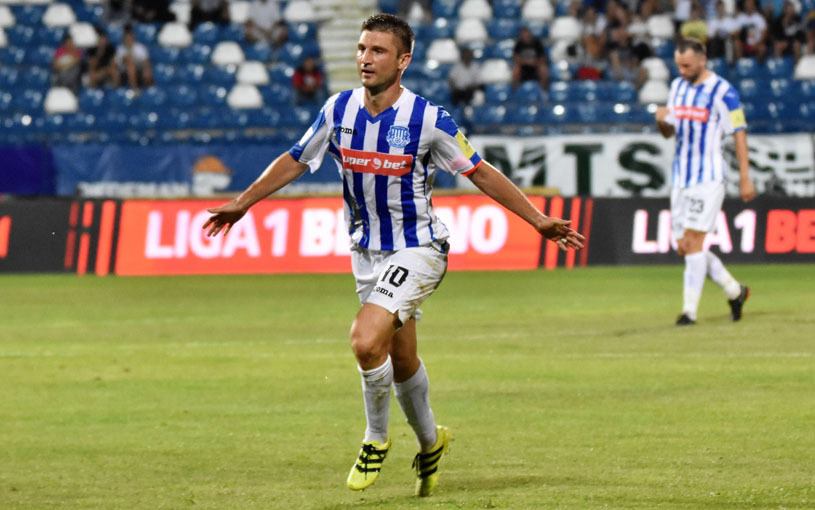
In 2018, team captain A. Cristea (a former FC Timisoara player) reached the 100-goal mark in the country’s first division.
This summer, CSM Politehnica finished in last place, 16th, in D1 and was relegated.
Although Iasi had Romania’s first modern university, Alexandru Ioan Cuza University, founded in 1860 shortly after the Union of the Romanian Principalities, one of the most prestigious institutions of higher education in the country, the city’s football club-fan has always referred, by name, to the city’s Gheorghe Asachi Technical University.
Iași was the capital of Moldavia between 1564-1859, one of the two capitals of the United Principalities between 1859-1862 and the (unofficial) “war capital” of Romania between 1916-1918.
The “Sweet Fair of Iasi”, with its Palace of Culture, Copou Park and Bolta Rece restaurant, has an extraordinary charm. Mihai Eminescu lived in the city for many years.
 English
 Dutch
 French
 German
 Romanian
 Spanish