
“A salute from old Troy / To Dan Coe’s fame / And once again it’s okay / Ahoe!”
In 2016, a 93-year history came to an end. With the bankruptcy of Rapid, something in Romanian football died. Nothing could ever be the same again. Just as it was never the same when Universitatea Craiova was buried, at least temporarily. Nor was it when the record of Politehnica Timișoara became the object of dispute between small-minded businessmen. Romania’s most beloved civilian clubs were offered up on the post-decembrist pyre of transition.
The sound of train wheels was left behind. (Ioan Chirilă was careful to go to heaven before he saw the scourge of Romanian club football.) The charm of Grant and the Giulesti gallery remained. His permanent front against the communist system.
The kicks of “Blonde Wonder” Baratky, the fences of “Berilă” Bogdan, the parades of Valentin Stănescu, the fame of the macho Dan Coe, the goal of Sandu Neagu in Guadalajara, the tricks of Rică Răducanu.
The uncontested final against Ferencvaros in the 1940 Central European Cup, a sort of Champions League (without the English) of those years, the 1967 title, the quarter-final against Steaua in the 2006 UEFA Cup, the countless Romanian Cups.
***
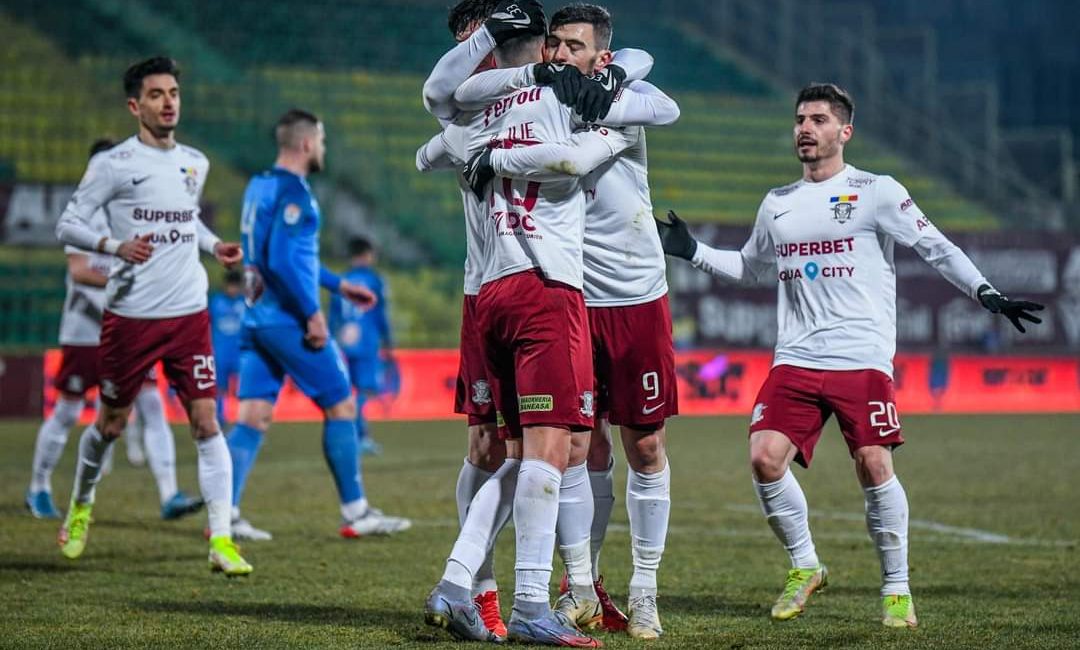
But Rapidulețul, for decades the most beloved team in Romania (when Craiova wasn’t yet Maxima, Steaua hadn’t won the European Champions Cup; Dinamo never reached that status), will be reborn like the Phoenix bird.
The white-red of Baratky, Vintilă, Rășinaru, Sipos, Raffinsky, Ionică Bogdan, Filote, Valentin Stănescu, Bazil Marian, Ozon, Macri, Greavu, Dan Coe, Puiu Ionescu, Nichi Dumitriu, Culae Lupescu, Năsturescu, Rică Răducanu, Sandu Neagu, Liță Dumitru, Goanță, Țâră, Rada, Toader, Iulian Chiriță, Bealcu, Rednic, Lupu, Pancu, Iencsi, Lobonț, Daniel Niculae, Săpunaru and Sefer is back in the arena.
***
And the arena, the old Giulești arena, is now ultra-modern.
The Rapid – Giulești stadium has 14,073 seats, all covered, and a nightclub. Its construction was planned for the final tournament of the 2020 European Championship (held in 2021), to which Romania was co-host and at which this sports base was supposed to host team training (along with other new stadiums in the capital, Steaua, Arcul de Triumf National Rugby Stadium, Dinamo, all built on the site of the old arenas with the same names; construction of the new Dinamo hasn’t started yet…).
Rapid’s arena is located on the site of the club’s former stadium. It was called Giulești – Valentin Stănescu, was officially inaugurated in 1939 and was closed in 2018. It had 19,100 seats and a nightclub.
***
Last summer, Rapid returned to the elite. And not long from now, Poli and Rapid – who are known to love each other endlessly – will meet again in Liga I derbies.
Then, to paraphrase a great Rapidista who passed into the shadow world, perhaps the people we were will meet the people we will be.
***
Rapid București, club founded in 1923: 3 national titles (1967, 1999, 2003), 13 Romanian Cups, 4 Romanian Super Cups, 1 Romanian League Cup, 2 unofficial national titles (1942, 1957), Cup of Nations quarter-finalist (1973), UEFA Cup quarter-finalist (2006), Central European Cup finalist (1940, final not contested), 2 Balkan Cups (1964, 1966), 1 European Faroe Cup (1968).
Article by Octavian Stăncioiu, Politehnica Timișoara spokesman
 English
 Dutch
 French
 German
 Romanian
 Spanish